








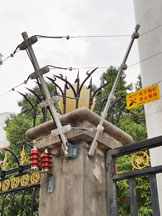
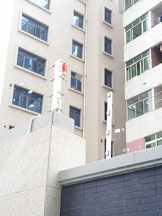
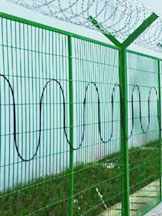









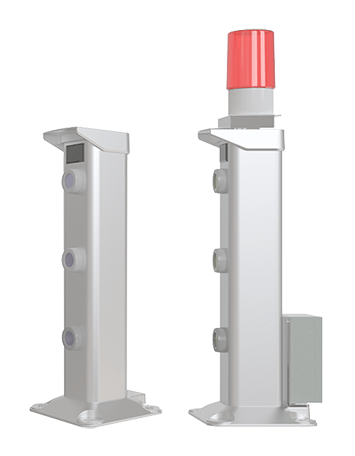

















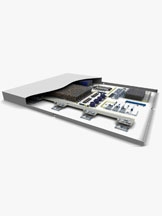

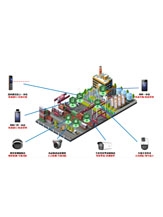
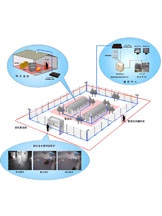
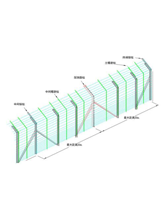
















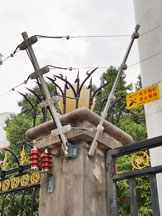
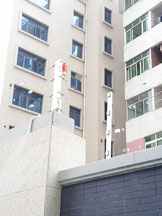
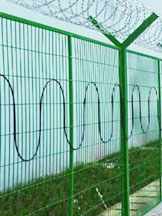
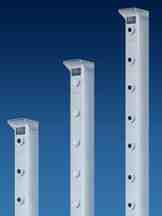
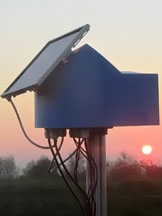
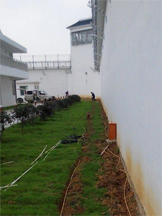























Application places of electronic fences:
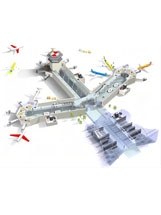
Widely applicable to ordinary residential communities, villa estates, enterprises and institutions, factories, warehouses, substations, water plants, power plants, schools, judicial detention centers and prisons, as well as airports, military bases, government agencies, key cultural heritage protection units and other sites.
Functional features of electronic fences:
They offer many advantages such as low false alarm rate, strong deterrence, high safety factor and beautiful appearance, ensuring the safe operation of every site. Electronic fences focus on prevention before incidents — prevention and early warning before accidents.
Most people are familiar with pulse electronic fences, but not many know about tension fences. Customers often ask: what is the real difference between tension fences and pulse fences? Let us give a brief introduction:
I. Different principles
1. After the pulse electronic fence energizer is powered on, the transmitter port sends pulse voltage to the front-end fence, about once every 1.5 seconds, with the pulse remaining on the fence for about 0.1 seconds. The front-end fence forms a circuit and returns the pulse to the energizer's receiving port, which receives the returned pulse signal; at the same time, the energizer detects the resistance between the two transmitter ends. If the front-end fence is damaged, causing an open circuit or short circuit, the receiving port cannot receive the pulse signal, or the resistance between the two transmitter ends is too small — either condition triggers an alarm.
2. A tension fence uses special pressure sensors to sense the force on the front-end specially made stainless steel wires and triggers the energizer alarm. The front-end lines of a tension fence do not form a circuit; each sensor independently detects the force on its corresponding stainless steel wire, i.e., the number of front-end wires equals the number of sensors.
Alarm functions: ★ slack alarm ★ line-break alarm ★ tamper alarm ★ power-loss alarm ★ fault alarm
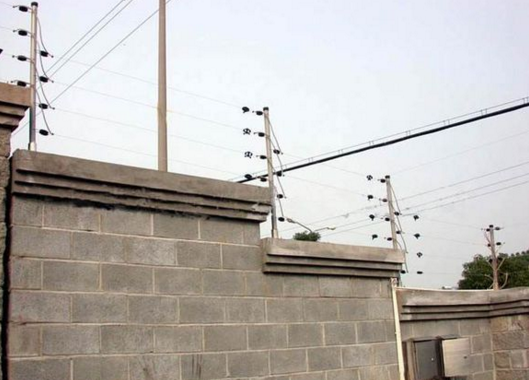
II. Different characteristics
1. Main characteristics of the pulse electronic fence:
1.1 Three functions: deterrence, blocking and alarm.
1.2 Deterrence: extremely strong deterrence; once touched, a very strong electric shock sensation is produced.
1.3 Alarm: short-circuit and open-circuit alarm functions.
1.4 Safety: uses high-voltage, low-energy pulses that do not directly harm human health, but produce a strong electric shock sensation for a short time, preventing further action.
1.5 Excellent environmental adaptability: unaffected by temperature and climate changes, or by terrain height and complexity.
2. Main characteristics of the tension electronic fence:
2.1 Uses tension detection technology; an electronic fence that balances blocking and alarm.
2.2 Mainly provides blocking and alarm functions with some deterrence, but because the front-end wires are not electrified, its deterrence is weaker than the pulse electronic fence.
2.3 The exposed mechanical parts carry no electricity and cause no direct or indirect harm to the human body.
2.4 Can detect multiple different types of alarm signals on the steel wire ropes and accurately locate the alarm.
2.5 Strong environmental adaptability: unaffected by greenery, trees, small animals, temperature or climate changes; terrain height and complexity have some influence.
III. Advantage comparison: pulse fence vs. tension fence
1. Advantages of the pulse electronic fence:
1.1 Combines deterrence, blocking and alarm: the front-end carries electricity with strong deterrence, giving intruders a real sense of fear.
1.2 Detects short-circuit and open-circuit signals of steel wire ropes in each zone and promptly sends alarms.
1.3 Lower overall cost; a single zone can be set longer.
2. Advantages of the tension fence:
2.1 The front-end carries no electricity, green and environment-friendly, with both blocking and alarm functions; deterrence is relatively weaker.
2.2 Can determine slack alarms.
2.3 Can be used in flammable and explosive places (such as gas stations, gas storage stations, oil depots, explosives warehouses, etc.).
- Previous: What to Note When Choosing Electronic Fence Materials
- Next: Common Cabling Methods for Passive Vibration Optical Fiber Systems
Please contact us right away or call the hotline: +86-13590284141. We will answer all your questions in detail. Project Manager Online