








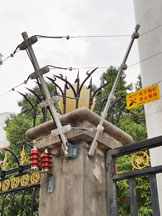











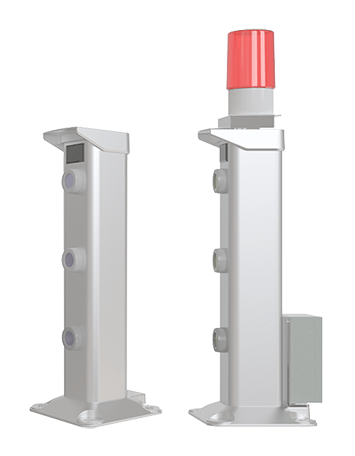





















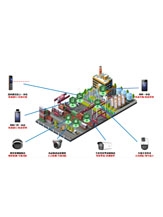
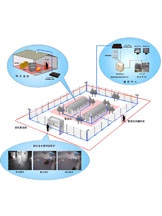
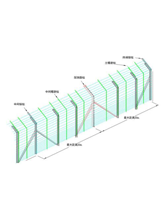
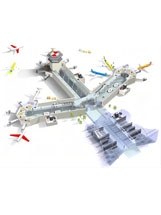
















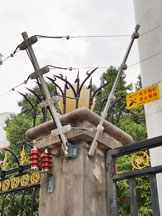




























An Electronic Fence has strong blocking and deterrent functions, features an alarm interface, and can be linked with the overall security system. So what functions does an Electronic Fence have?
Taking the Antongruida Pulse Electronic Fence as an example, its functions include: fence contact, cut prevention (bypass prevention), short circuit, wire break, tamper prevention, communication failure, power failure, and fault, etc.
Below is a detailed explanation of the Electronic Fence functions:
"Fence contact" alarm: simply explained, it is an alarm when a person touches a "single wire". The Antongruida TD series Electronic Fence is a commonly used standard-function host, while the TDF series Pulse Electronic Fence host supports single-wire fence contact alarm.
Cut-prevention (bypass-prevention) alarm: when two wires in the same loop are shorted, the host will indicate a cut-prevention alarm (a cut-prevention module must be added).
Short-circuit alarm: when two adjacent alloy wires at the Electronic Fence front end are shorted, the host indicates a short-circuit alarm.
Tamper alarm: when the host cover of the Electronic Fence is opened, the Electronic Fence host indicates a tamper alarm (customized function).
Wire-break alarm: when a wire breaks on any loop of alloy wire at the Electronic Fence front end, or a terminal is not connected properly and becomes loose, the Electronic Fence host indicates a wire-break alarm.
Power-failure alarm: when the 220V mains power of the Electronic Fence host is cut off, the Electronic Fence host indicates a power-failure alarm.
Fault alarm: when an internal fault occurs in the Electronic Fence host itself, the Electronic Fence host indicates a fault alarm.
Communication alarm: when communication between the Electronic Fence host and the central control keypad fails, a communication-failure alarm is indicated, as well as line faults.

How are the alarm functions of the Antongruida Pulse Electronic Fence system achieved?
The Antongruida Pulse Electronic Fence system has a learning function. If someone accidentally touches the fence, or another object (such as a tree branch) momentarily touches the fence, because this is not a true intrusion, the system has the ability to distinguish and does not alarm.
Only when an intruder forcibly breaks in and climbs over the Electronic Fence will the system send the corresponding alarm. Currently, the Antongruida Electronic Fence supports alarm types such as fence contact, cut prevention, short circuit, open circuit, tamper, fault and communication failure, guarding perimeter safety.
- Previous: What Is the Purpose of Installing an Electronic Fence at a Substation?
- Next: What If the Electronic Fence on the Wall Electrocutes Someone?
Please contact us right away or call the hotline: +86-13590284141. We will answer all your questions in detail. Project Manager Online