






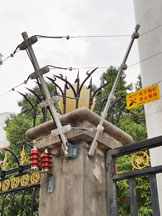
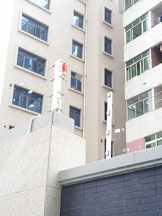





























































Engineering customers often do not know how to distinguish and understand vibration optical fiber cabling situations. Below, Antongruida gives a brief introduction to passive vibration optical fiber systems.
The vibration optical fiber alarm system uses optical cables as sensing elements; the vibration optical fiber energizer collects and analyzes front-end cable vibration signals. Thanks to the characteristics of optical cables, the system can detect long-distance, large-area perimeter zones, with each zone ranging from hundreds of meters to over a kilometer.
A passive vibration optical fiber system means the vibration energizer is placed indoors, and no power lines or signal lines are required outdoors. There are two cabling methods for passive vibration optical fiber systems:
1. Single-cable cabling 2. Separate cabling
Whichever cabling method is used, the vibration energizer is the same; the difference lies in the type and quantity of zone-splitting packages and optical cables.
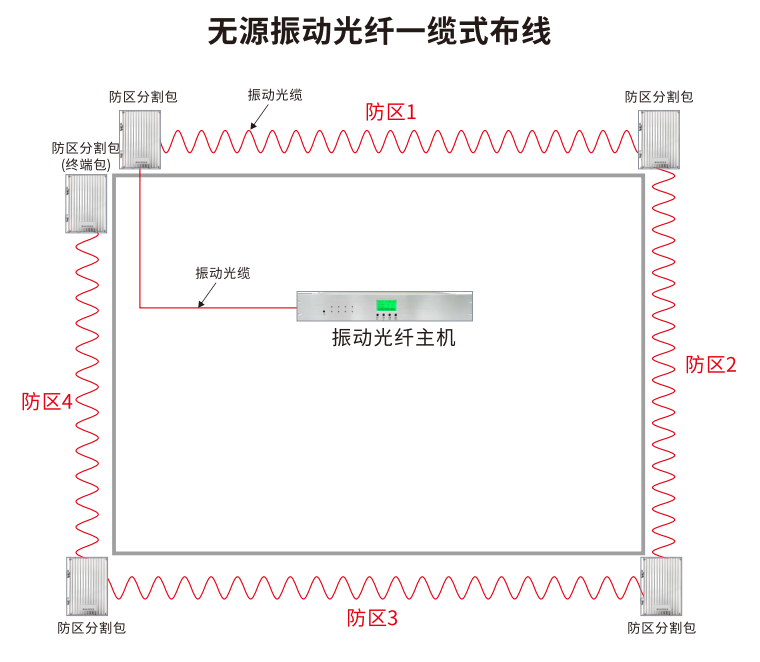
1. Single-cable cabling: one optical cable is drawn from the energizer, runs around the whole perimeter to the end of the zones, and zone-splitting packages divide the zones; the whole system uses only one type of cable. The number of cable cores and zone-splitting packages depends on the number of zones (for one-direction cable routing: 4 zones need 9-core fiber and 5 zone-splitting packages; 8 zones need 14-core fiber and 9 packages; 16 zones need 24-core fiber and 17 packages). Advantages: simple cabling, fewer zone-splitting packages and cables. Disadvantages: more splice points, so troubleshooting is slightly more complicated than separate cabling.
Single-cable cabling diagram (4 zones):
2. Separate cabling: one guide cable is drawn from the energizer to each zone-splitting package (note: not the zone terminal package), and then vibration optical cables are run from the zone-splitting packages to the terminal packages at the end of each zone. The whole system uses two types of cables: guide cable and vibration cable. The number of cable cores and packages depends on the number of zones (for one-direction routing: 4 zones need one set of 6-core guide fiber, 4 sets of 4-core vibration fiber, 2 zone-splitting packages and 4 zone terminal packages; 8 zones need one set of 12-core guide fiber, 8 sets of 4-core vibration fiber, 4 zone-splitting packages and 8 terminal packages; 16 zones need one set of 24-core guide fiber, 24 sets of 4-core vibration fiber, 8 zone-splitting packages and 16 terminal packages). Advantages: troubleshooting and fiber splicing are relatively simpler. Disadvantages: more cables and zone-splitting packages, so the cost is considerably higher than single-cable cabling.
Separate cabling diagram (4 zones):

- Previous: Pulse Electronic Fence vs. Tension Fence: Key Differences Explained
- Next: Installation Steps of Pulse Electronic Fence Explained
Please contact us right away or call the hotline: +86-13590284141. We will answer all your questions in detail. Project Manager Online