

















































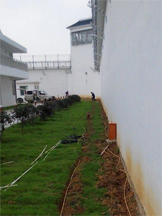























Today we talk about the evolution of the modern Pulse Electronic Fence, which has roughly gone through three stages:
(I) First stage: The Electronic Fence originated on mobile ranches in Australia. To manage grazing, ranchers strung a wire, applied direct current, and formed a simple Electronic Fence that kept livestock within a certain range. After the war, in Europe, animal husbandry accounted for a high proportion of agriculture, and strong market demand promoted the development and popularization of the Electronic Fence. Cattle and sheep retreated when encountering the electric shock barrier of the Electronic Fence, which well played the role of a "shepherd" and also prevented large wild animals or predators from entering, greatly promoting the development of animal husbandry at that time, and it still plays a major role in some countries with developed animal husbandry.
(II) Second stage: With the development and deepening of the entire Electronic Fence industry, product accessories and types increased. In the mid-to-late 1990s, intelligent perimeter security alarm systems with blocking and alarm functions began to be professionally used in the field of public security. They have open-circuit, short-circuit and power-loss alarm functions while retaining the safe blocking function of Electronic Fences. This product fully considers human initiative and intelligence, and can accurately judge various situations such as accidental touch, deliberate damage and illegal intrusion, making it a relatively good choice for current perimeter security projects.
(III) Third stage: As people's requirements for product performance and functions became higher, products needed to be more humanized, and products with more functions began to appear. The products of the second stage output a constant pulse voltage, so when the perimeter length changed, the front-end voltage would become too high or too low with the perimeter length; meanwhile, when the products were installed at villas or communities with low walls, they would accidentally shock children or nearby staff during the day. Based on the above problems, more advanced products have emerged that can adjust the output voltage and set high-voltage mode and safe mode switching. When switched to safe mode, touching the electronic cable with a hand causes no electric shock, but if damaged, an alarm signal is still sent. Meanwhile, some products at this stage also have functions such as remote control and long-distance operation, providing better products for large-scale application in villas and communities.
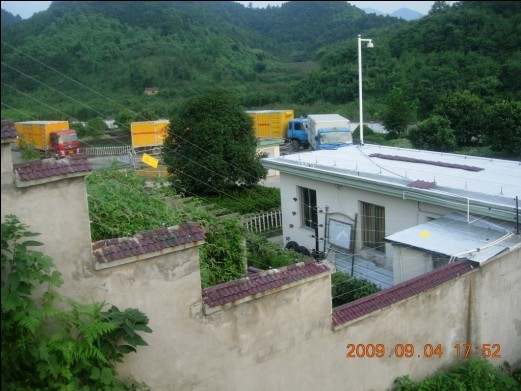
II. Network development trends
(I) Networking
Most current perimeter alarm systems remain at the level of front-end alarm and single-device control and management. To achieve cross-region remote control and management, integration with a third-party alarm system must be relied on. However, alarm system manufacturers may not provide open protocols and interfaces, making it difficult to form a unified integrated platform, which turns the security system, which should have been planned in a unified way, into a "decentralized management" system.
Electronic Fence systems, in particular, need not only to alarm but also to play blocking and deterrence roles through high-voltage pulses. Therefore, when linked with other security systems, most Electronic Fence systems can only interact based on switching signals and view alarms on site, and cannot remotely understand the working status of the Electronic Fence system in real time, let alone remotely adjust the working parameters of the Pulse Electronic Fence.
As the security industry moves into networking, market feedback shows that demand for networked security products continues to rise. As a new force among networked security products, the networked Electronic Fence will rely on its mature system technology and market-compliant pricing system to complete the technological innovation of the networking trend of Electronic Fences, both meeting users' real needs and filling market gaps.
(II) Networked Electronic Fence
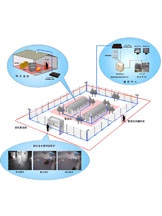
The networked Electronic Fence combines traditional Electronic Fence technology with network technology, and its terminal controller can transmit information to a web server over the network. Users can directly use a browser to view the alarm information on the web server, and authorized users can also configure the system.
The overall architecture of the networked Electronic Fence can be divided from bottom to top into five layers: physical layer, sensing layer, control layer, network layer and application layer.
1. Physical layer
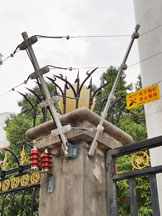
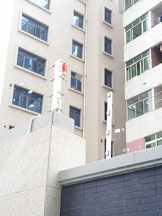
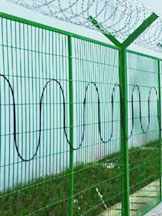
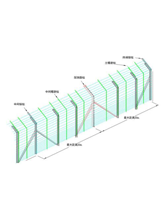
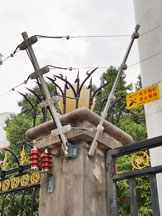
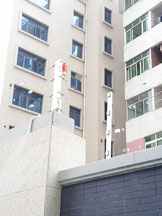
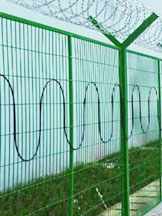
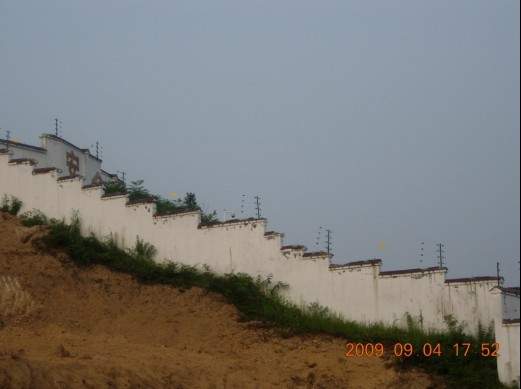
The latest security concept of "blocking first, alarm as a supplement" has overturned the traditional security system concept of "alarm first" and is the current development trend of technical defense. Surveillance cameras, passive infrared detection, active Infrared Beam Detectors, etc., can all record criminal acts and send alarm signals, but cannot effectively stop illegal crimes. Adopting the Electronic Fence front-end system solves such problems: installing an Electronic Fence on the perimeter wall can effectively increase the wall height, and connecting a non-lethal high-voltage pulse to the fence forms physical blocking and electric shock against intruders, effectively deterring them and preventing intrusion.
2. Sensing layer
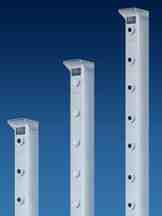
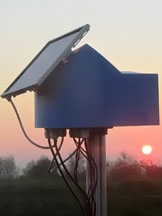
The front-end sensors of the networked Electronic Fence system - the Electronic Fence control host is the device that generates and receives high-voltage pulse signals. When the Pulse Electronic Fence front end is in fence-contact, short-circuit or open-circuit state, it can generate an alarm signal and send the intrusion signal to the control layer of the networked Electronic Fence, forming the sensing layer. Through the patented BI-polar design, all wires output from the Electronic Fence control host to the fence front end have high-voltage pulse output and alarm detection functions.
3. Control layer
Perimeter security systems often need to manage a large area and many front-end alarm devices. To improve system efficiency, centralized management functions are required. According to the characteristics of perimeter security systems, Modbus data bus technology is preferred to integrate, manage and control the front-end sensor layer devices, realizing functions such as arm/disarm, working-mode adjustment, alarm signal analysis and processing, management control and signal network upload.
4. Network layer
With the introduction of the concepts of "Safe City" and "Smart City", Electronic Fence systems with network management functions are increasingly favored by users. Supporting different user needs, they support multiple network structures such as LAN, WAN and Internet, providing a foundation for network communication support for system devices and realizing the transmission of front-end alarm device information.
5. Application layer
The system business application layer mainly provides system functional modules, such as Electronic Fence remote control, alarm linkage processing and access functions for other security systems. Through integration with other systems, it can monitor the perimeter, buildings and fire-fighting equipment at the surveillance site in real time, process alarm signals in real time, and, if an intrusion occurs, link video equipment for recording, snapshotting and evidence collection, while issuing audible and visual warnings and reminding remote staff to handle it, so as to ensure the safety of the front-end surveillance site. In addition, the system should provide open system interfaces to enable expansion with other security systems.
- Previous: How Does a Community's Electronic Fence Work?
- Next: Antongruida 2022 National Day Holiday Notice
Please contact us right away or call the hotline: +86-13590284141. We will answer all your questions in detail. Project Manager Online