








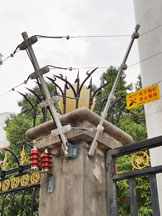
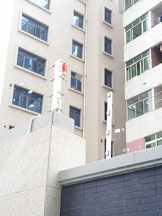
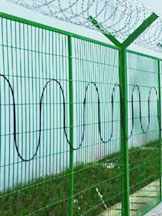








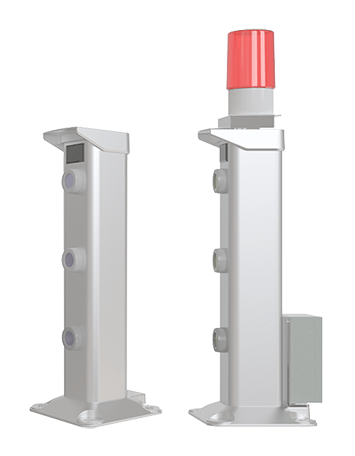
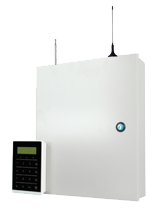
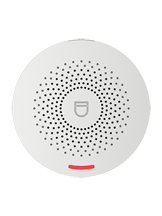
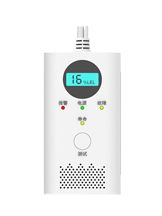

































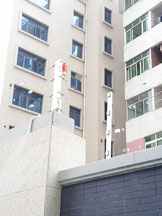
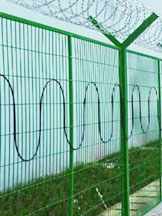
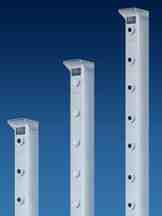
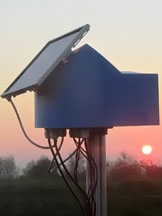


























- Photos & Details
- Specifications
Laser Beam Detectors excel in long distance, strong penetration, and low false alarm, suitable for high-level perimeter protection; Infrared Gratings are superior in low cost, easy installation, and pet immunity, suitable for short-range door/window/passage protection.
I. Core Parameter Comparison:
| Comparison Dimension | Laser Beam Detector | Infrared Grating |
|---|---|---|
| Detection Distance | Outdoor 100-500m, up to 1km | Outdoor 5-50m, indoor up to 100m |
| Beam Characteristics | Good monochromaticity, extremely small divergence angle (<0.1deg), concentrated energy | Large divergence angle (5-10deg), dispersed energy, prone to scattering |
| Anti-interference | Excellent, resistant to rain, snow, fog, strong light, and electromagnetic interference, minimal crosstalk | Average, easily affected by sunlight, rain, snow, sand, and small animals |
| False Alarm Rate | Extremely low (<1%), digital codec + frequency conversion technology | Relatively high (5-30%), needs multi-beam logic to reduce |
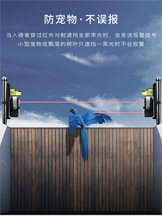
| Trigger Logic | Alarms on single-beam occlusion, or multi-beam combination | Alarms only when 2+ adjacent beams are simultaneously occluded (pet immunity) |
| Installation & Commissioning | Requires precise beam alignment, high commissioning difficulty, professional tools needed | Wide beam, easy alignment, buzzer prompt, installable by beginners |
| Cost | High (unit price 2-5 times that of Infrared Grating) | Low, cost-effective |
| Operating Temperature | -40C to 70C, adapts to extreme environments | -25C to 60C, average low-temperature performance |
II. Laser Beam Detector: Advantages and Shortcomings
Advantages
Ultra-long detection: beam attenuation is minimal, stable beyond 500m, suitable for large factories, oil fields, and border lines.
Stable in severe weather: strong penetration of rain, snow, fog, and haze; no false alarms in heavy rain or dense fog.
Strong anti-interference: good laser monochromaticity, immune to sunlight, lighting, and electromagnetic devices; multiple sets in parallel without crosstalk.
Low false alarm + high reliability: concentrated energy, not easily triggered by fallen leaves or birds; IP67 protection, long life.
Low power consumption: operating current about 10mA, can be armed 24 hours, suitable for wireless/solar power.
Shortcomings
High price: high equipment and construction costs, not worthwhile for small scenarios.
Difficult commissioning: long distances require precise alignment, slight deviation causes missed alarms, depends on professional personnel.
Low cost-effectiveness at close range: within 50m, less economical than Infrared Grating.
III. Infrared Grating: Advantages and Shortcomings
Advantages
Cheap and easy to use: low unit price, simple wiring, suitable for projects with limited budget.
Extremely easy installation: wide beam, large tolerance, alarms upon alignment, no professional tools needed.
Pet-immunity logic: alarms only on adjacent multi-beam occlusion, filters out cats, dogs, and birds, family-friendly.
Small and concealed: slim appearance, can be embedded in doors/windows or walls, aesthetically unobtrusive.
Shortcomings
Short distance: severe signal attenuation beyond 50m, prone to false alarms in dense fog/heavy rain.
Weak anti-interference: easily triggered by direct sunlight, car lights, and welding arc; high false alarms from sand/leaves.
Fast aging: infrared LED decays over time, maintenance and calibration needed every 1-2 years.
IV. Selection Recommendations
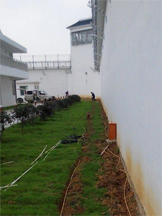
✅ Choose Laser Beam Detector:Perimeter >=100m, high security level (detention centers/substations), severe climate (rainy/foggy), low false alarm requirement。
✅ Choose Infrared Grating:Door/window/balcony/passage protection, distance <=50m, limited budget, pet immunity needed。
V. Summary
The Laser Beam Detector is along-distance, high-reliability, low-false-alarmhigh-end solution; the Infrared Grating is theshort-distance, economical, easy-to-installconsumer preference. Choose according to distance, environment, and budget.
- Previous: No-Smoking Detection Alarm
- Next: 没有了!
Please contact us right away or call the hotline: +86-13590284141. We will answer all your questions in detail. Project Manager Online