










































































- Budget: ~RMB 00,000
- Products: Vibration Optical Fiber
- Construction: General Contractor
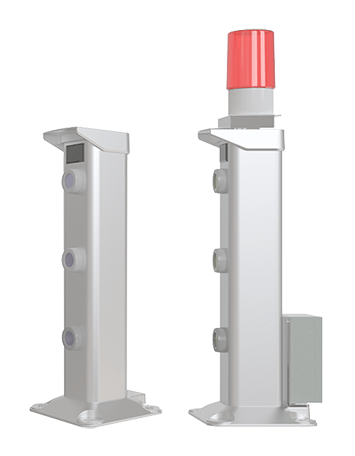
Hubei Province is an important energy hub in central China, and in recent years the construction of liquefied natural gas (LNG) receiving terminals and peak-shaving storage tanks has been accelerating. However, because LNG stations store flammable and explosive media, they impose extremely high requirements on perimeter security. Conventional methods such as Infrared Beam Detectors and Electronic Fences are prone to false alarms and missed detections in severe weather or complex terrain, making it difficult to meet all-weather, high-precision security needs. Against this background, Vibration Optical Fiber sensing technology—with its advantages of passive detection, immunity to electromagnetic interference and concealed installation—has gradually become the preferred solution for the perimeter alarm systems of Hubei's LNG stations. This article takes the actual deployment of an LNG peak-shaving station in Hubei as an example to analyze the construction process and operational results of the Vibration Optical Fiber alarm system.
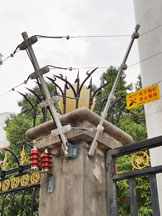
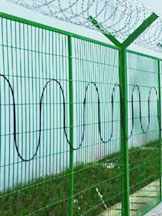
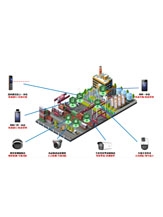
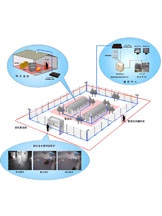
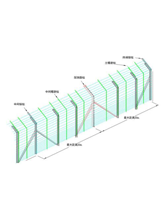
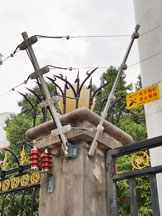
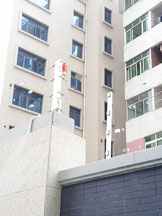
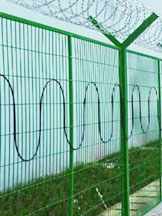
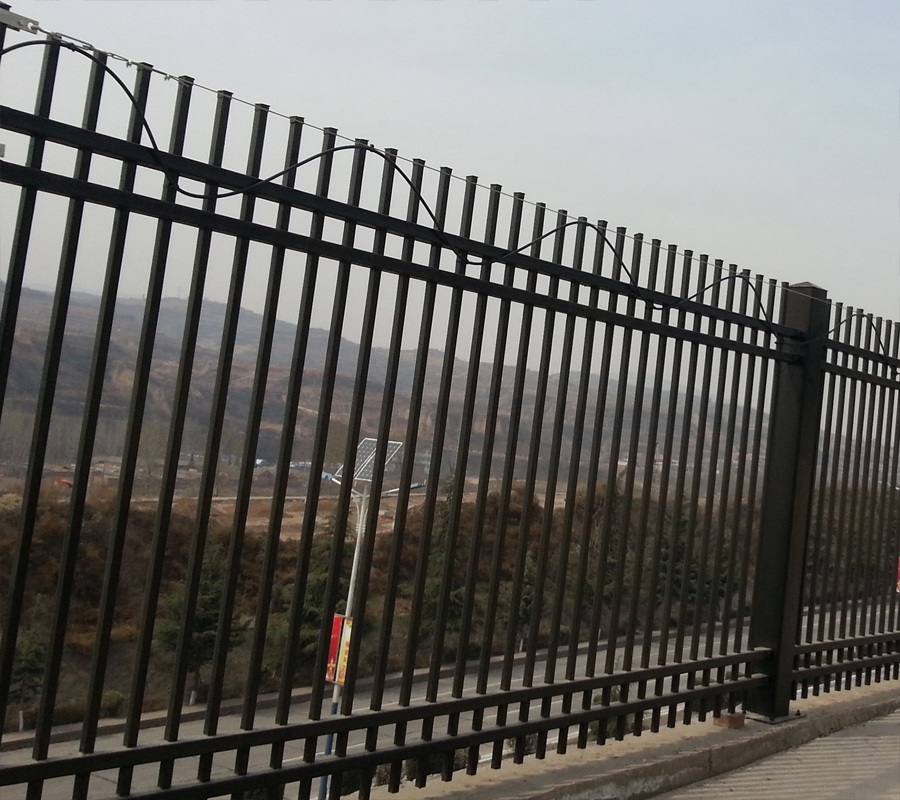
This LNG station is located along the Yangtze River, covering about 200 mu with a perimeter of more than 1.5 km. Surrounding it are farmland, roads and a small number of construction areas, making environmental interference sources complex. In the early stage, the security team tried a combined scheme of leaky coaxial cable and video surveillance, but during the rainy season soil moisture repeatedly caused false alarms, and when large machinery such as excavators approached, it could not effectively distinguish intrusion from disturbance. After extensive technical evaluation, the team finally decided to introduce a distributed Vibration Optical Fiber system based on the dual Mach-Zehnder interferometer principle. Using the station's existing fence as the laying carrier, the sensing optical cable was routed in an S shape along the bottom and middle of the fence, so that the original structure was unaffected while achieving dead-corner-free sensing coverage.
During construction and commissioning, the project team made several optimizations tailored to the climate and geological conditions unique to Hubei. Because the station is near the river with a high groundwater level, all optical cable splice boxes used IP68 sealing and were treated against condensation. Meanwhile, the system backend set multi-level sensitivity thresholds, and algorithms filtered out periodic vibration signals such as wind, rain and passing vehicles. Short pulses caused by small animals common in the area—hares and birds—touching the fence were flagged as invalid events by a machine-learning model, while human climbing, knocking and cutting were precisely identified and triggered alarms. During commissioning, the team simulated more than ten intrusion scenarios, including climbing over the fence, drilling damage and tool prying; the alarm accuracy reached over 98%, and positioning error was controlled within plus or minus 3 meters.
After the system was officially put into operation, it has run stably for more than a year, issuing seven valid intrusion alarms in total, all handled promptly by security personnel. On one occasion at 2 a.m., the system detected a regular knocking signal lasting about 15 seconds in the northwest corner of the fence, immediately pushed an alarm to the control room, and linked the nearby high-speed PTZ dome camera to automatically turn toward the target area. On-duty staff confirmed via video that two suspicious individuals were trying to cut the fence with a hacksaw, and immediately dispatched a patrol team to the scene, successfully preventing a potential act of sabotage. In addition, the system supports event playback, correlating and archiving vibration waveforms, timestamps and video screenshots to provide strong evidence for subsequent security audits. The operator reported that, compared with previous years, the perimeter false-alarm rate dropped by about 80%, greatly reducing the workload of on-duty personnel.
As the Hubei case shows, Vibration Optical Fiber alarm systems offer significant application value in high-risk industrial sites such as LNG stations. They not only overcome the adaptation shortcomings of traditional perimeter equipment in complex natural environments, but also improve the accuracy of intrusion discrimination through intelligent signal processing. As domestic optical fiber sensing technology matures, construction costs have gradually decreased and maintenance has become easier. In the future, this technology is expected to integrate with thermal imaging, radar and other sensing means to build a more three-dimensional security system, providing a solid guarantee for the safe operation of energy infrastructure in Hubei and across the country.
- Previous: Analysis of a Vibration Optical Fiber Case in a New Smart Residential Community in Shanghai
- Next: Perimeter Vibration Optical Fiber Alarm Case at a PLA Barracks
Please contact us right away or call the hotline: +86-13590284141. We will answer all your questions in detail. Project Manager Online